
Precision Cutting Metal Tubing
Precision, Burr-Free Cutting To Customer-Specific Lengths & Tolerances
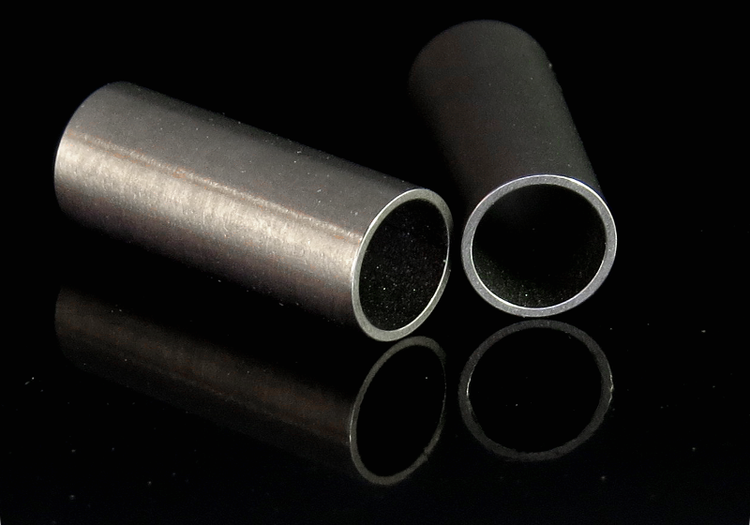
Precision Tubing Cutting & End Forming Services
Component Supply provides precision, burr-free cutting services for small diameter metal tubing used in medical device, laboratory, research, and industrial applications. Our tubing fabrication capabilities support customer-specified lengths and tight dimensional tolerances while helping maintain clean edge quality and consistent component performance across both prototype and production quantities.
Component Supply commonly processes:
Precision tubing cutting is commonly utilized in:
Our precision tubing cutting capabilities support:
In addition to precision cutting, Component Supply offers a variety of secondary tip grinding and end-forming operations designed to support specific penetration characteristics, fluid flow requirements, and assembly needs for cannulas, needles, and specialty tubing components. Available tubing point styles include:
Component Supply works closely with engineers to determine appropriate tubing dimensions, wall thicknesses, cut tolerances, edge conditions, and point geometries based on penetration force requirements, septum interaction, manufacturability, fluid flow characteristics, and overall device performance. Following cutting and end forming, components can be further customized through EDM machining, laser welding, OD grinding, bending, passivation, coating coordination, and additional secondary fabrication operations to support complete prototype and production-ready assemblies.
- Welded and drawn 304 stainless steel hypodermic tubing
- Welded and drawn 316 stainless steel hypodermic tubing
- Seamless annealed tubing
- Brass tubing Specialty metal tubing upon request
Precision tubing cutting is commonly utilized in:
- Cannula manufacturing
- Needle fabrication
- Catheter shaft assemblies
- Fluid delivery systems
- Minimally invasive surgical devices
- Laboratory instrumentation
- Diagnostic equipment
- Industrial fluid management systems
Our precision tubing cutting capabilities support:
- Square-cut tubing
- Burr-free edge finishing
- Tight-tolerance cut lengths
- Short miniature tubing segments
- Thin-wall tubing applications
- Prototype and production quantities
- Specialty tubing fabrication
- Precision cannula preparation
In addition to precision cutting, Component Supply offers a variety of secondary tip grinding and end-forming operations designed to support specific penetration characteristics, fluid flow requirements, and assembly needs for cannulas, needles, and specialty tubing components. Available tubing point styles include:
- Chamfer tips
- Bevel cuts (bias cuts)
- Pencil points
- Deflected points
- Anti-coring (Huber) points
- Closed-end configurations
- Trephine cuts
- Custom tip geometries
Component Supply works closely with engineers to determine appropriate tubing dimensions, wall thicknesses, cut tolerances, edge conditions, and point geometries based on penetration force requirements, septum interaction, manufacturability, fluid flow characteristics, and overall device performance. Following cutting and end forming, components can be further customized through EDM machining, laser welding, OD grinding, bending, passivation, coating coordination, and additional secondary fabrication operations to support complete prototype and production-ready assemblies.