Choosing the Right Mesh Size for Your Research: Tips from Component Supply
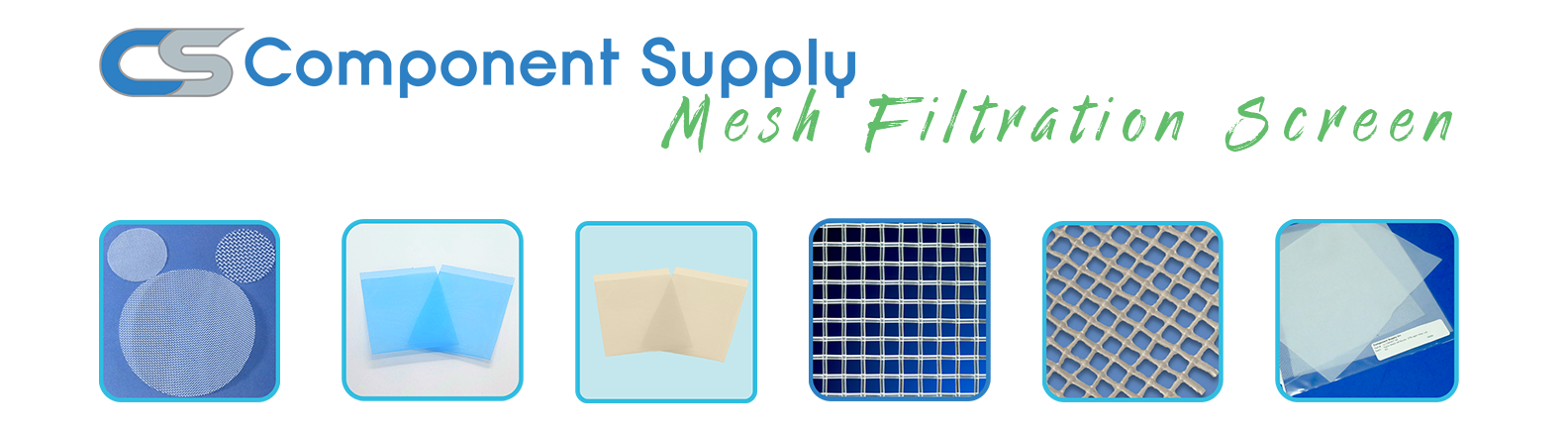
At Component Supply, we get questions daily about mesh opening sizes for a variety of applications, from separating larvae to filtering blood samples. Understanding mesh specifications and micron sizes is critical to ensure experiments and tests run smoothly and accurately.
Researchers working with species like the spotted-wing drosophila (Drosophila suzukii) need to select the proper mesh filtration screening size to handle specimens at different life stages. According to the University of Florida Entomology and Nematology Department, adult spotted-wing drosophila range from 3,000 to 4,000 microns, first instar larvae are about 70 microns, mature larvae grow up to 6,000 microns, and pupae measure 2,000 to 3,000 microns.
Note: These measurements refer to length and are not equivalent to the mesh size required to contain or exclude the specimen. Each experiment may require different estimations.
Component Supply Recommendations:
~1,000 micron mesh – Adults and more developed larvae
~400 micron mesh – Pupae
~40 micron mesh – Early-stage larvae
Because each test is unique, we recommend experimenting with several mesh sizes to determine the best fit for your specific application. That’s why we offer mesh in as little as 1/4 yard lengths, providing flexibility for researchers and product designers.
Interested in using Nitinol in your medical device design? Read to find answers to questions like: What is Nitinol? Where did Nitinol come from? How does Nitinol work? Are there
We’re excited to announce the addition of Radiation-Stable Polycarbonate Luer Fittings to our fitting product category. These fittings are a great option for applications involving sterilizing radiation, like gamma irradiation